Good idea, that ends up being a total mess
Well, what a bummer. Ever since I saw the trailer for this episode, I was pretty excited. Miley Cirus is back (for some reason that got me excited), seemingly an interesting premise, and of course, its Black Mirror. But, while not a bad episode, this is definitely a let down in two of the most important elements of what made the show so great: its script and its use of technology.
This episode stars Miley Cyrus as Ashley O, a new and trending pop singer with a dark side to her. Rachel, portrayed by Angourie Rice, is a lonely, shy, teenage who idolizes Ashley O. Upon hearing about the new Ashley Too toy, a toy that talks and replies to anything it is asked, Rachel immediately gets one. To be honest, this summary was hard to type. Not because I cannot type a summary for it, but because of the convoluted, messy and sloppy nature of the story. This is the best I can do without going into spoilers and this is really all the I remember from the episode itself.
This episode was kind of a mess. The script is all over the place; with two stories that thinnly connect with one another, and with both stories having major issues, none of it seems to fit to a cohesive whole. The story with Miley Cirus starts off with the pop singer all happy-go-lucky when singing and doing interviews, but really upset and depressed when alone in her rich mansion. It is the typical happy pop star with a dark side to them; however, this is barely explored. Without spoiling anything, this story goes from this simple premise and character study of a pop singer, to a convoluted and over-the-top thriller about deceit and deception. This twist makes absolutely no sense when looking at the slow-paced start of the story. It totally changes the tone of the story from a pop singer trying to find her identity, to a convoluted espionage tale in a matter of seconds. By the end of her story, you feel like you just watched 3 other stories that the writer/director were trying to tell, but instead of splitting these stories up they just shoved it into this one instead.
The other story, with the family and the little girl who buys the toy version of Ashley, is also extremely weak and sloppy. It starts off with a girl who is extremely shy, nervous and a loner with no friends. Idolizing Ashley, upon hearing of the Ashley Too toy coming out, she begs her dad to buy her one for her birthday. This sets off the technological aspect that the show thrives on. And on both a narrative level and as an examination of technology, this story fails in both regards. Narratively, this episode switches between a story of an awkward kid in school, to a family drama, to a story about this girls dad and his experiments with mice, to a completely out-of-place sci-fi espionage thriller. None of these parts work together. They are all just a mish-mash of different cliches about a young teenager in school in one second, to a sci-fi espionage in the next. The first half of this story is extremely boring and slow, while the second half is much more faced paced and all over the place. By the end, none of it really makes any sense and your left questioning why the first 40 minutes are just set up to a story that does not need that much set up. In terms of its examination of technology, there is only hints of it in this story. When it is about to really delve into it, it just kind of drops the ball and fizzles out till it becomes a sci-fi espionage thriller.
When combined, this episode really falls flat both narratively and in its examination of technology. Overall, the episode is just so boring. Nothing happens in the first 40 minutes. After the 40 minute mark, the story goes into 20 different directions; trying to wrap up all of its conflicts in too quick of time. The two stories that are told here simply do not work by themselves, but when putting them together into one episode leads into an even bigger mess. Each story in it of themselves have 3 totally inconsistent stories within them, and when combined, it is just a convoluted mess of 7 tonally different stories. None of it goes well together and they simply do not add up. It feels more like a collage than a picture--a pretty mediocre collage at that too
When it comes to its examination of technology, there is barely any of it in this episode. The Ashley Too doll, which provides the shows main tool for examining technology, does barely anything in this episode. Compare this to any other good episode of Black Mirror, such as Nosedive, you see how little use the technology was in this episode. In Nosedive, we see the importance of technology in the narrative. It plays a central role in the characters, their arcs, and for many of the events that take place in the story. Not only that, but it provides an excellent examination of how technology makes us lose our identity and forces us to become something we are not. None of this creativity and craftsmanship is shown in this episode. When looking at the episode as a whole, the technology was put there because it is a Black Mirror episode and you need technology in Black Mirror, not because it was needed for the narrative.
What makes this all the worst is that there is a framework of good ideas in this episode, but it was simply ruined by trying to cram everything together into one episode. There are good aspects to this episode, like the acting is not bad, Cyrus does do a decent job (although, it really is not that amazing), and some good visuals; but overall, it was just a jumbled mess. It failed narratively while also failing to have anything interesting to say about humanity's use of technology.
3/10
Showing posts with label Movie Review. Show all posts
Wednesday, June 5, 2019
Sunday, January 20, 2019
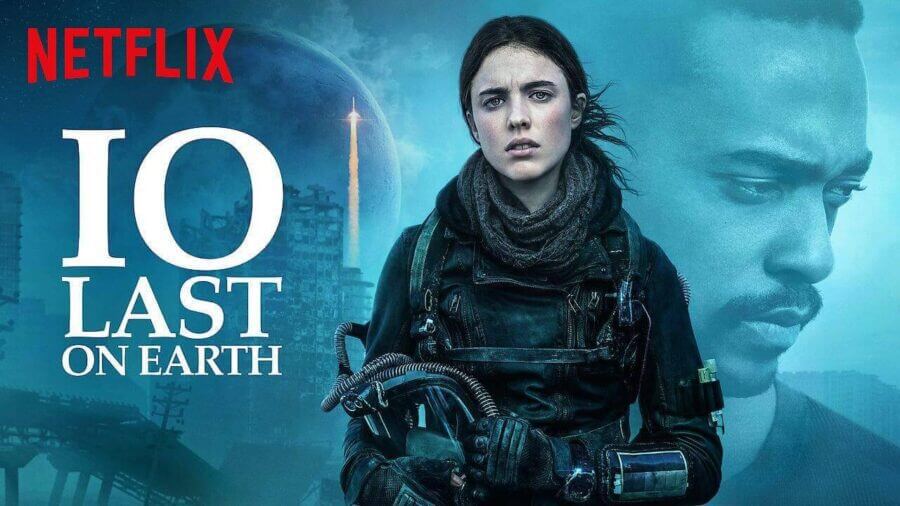
Netflix’s IO is BORINGGGGGG
I love a good slow-paced Sci-fi film. I love 2001: A Space Odyssey. I really liked Moon and it’s slow building character story. I even liked Prometheus for its great visuals and interesting concepts. However, there comes a fine line between being slow and interesting, and being just plain boring. Netflix’s IO is the later; a film that moves way too slowly, has no interesting characters, and by the time it gets to the actual meat of the plot, it is just too late for the audience to care.
The story in IO is about a young scientist named Sam, played by Margaret Qualley, who tries to save a dying Earth. Most of the people on Earth when to a near-by space station by Jupiter's moon IO. One day on her stay on earth, Micah, played by Anthony Mackie, shows up to talk to Sam's father. Without trying to spoil much, this is the synopsis of the boring film IO.
To give credit where credit is due, this film did try. It did try to make a more emotional and character focused Sci-fi post-apocalyptic film. See, that’s fine if the characters were interesting. I mean look at Moon, a film focused entirely on one character. Sam Rockwell's character and his interaction with the robot and seeing his emotions as the plot unfolds is pretty entertaining and fun to watch. The plot moves in a fast pace, and Rockwell's character is pretty interesting. In IO on the other hand, it tries to do the same set up, but without great acting, an interesting plot, or good characters.
Let us start with the acting. The acting in this film is fine; it really goes from passable to decent. Margaret Qualley's performance is fine. I feel like she's actually a pretty good actress, but in this film I feel like she really is not giving it her all. She does not really show that much range of emotions, and even when she does at some points, it just does not seem natural. Anthony Mackie's performance is also just fine. Again, I feel not much effort was put into his performance either. These are by no means bad actors, just one's who might not have cared that much for the project.
Another major issue with this film is the plot; or the lack thereof. The film really does not go anywhere for most of its runtime. It feels like a 2 hour film, even though it's only an hour and a half. Nothing happens till an hour and 10 minutes into the film, and by that time you really do not care at all. There is even a countdown for these characters to go do something (no spoilers), and honestly the film could have completely forgotten about the countdown and thrown that element out the window and it would have had no change to the plot at all. The characters just sit around do nothing for most of the time, till close to the last 20 minutes of the film.
The biggest sin of this film is making us focus on characters that we simply do not care about. If you'r not going to have much of a plot, then making the characters engaging is probably the most important thing for you to do; and yet, these characters are so boring. I did not care about any of their past traumas, nor did I care about their relationship. Maybe that is due to the fact that much of the character stuff is pretty predictable; I mean, I, probably along with most people, already knew that this film was going to force a dumb romance part with the two leads. Which is fine, but the way they go about it is so cliche and dumb. They just sit around, talking about their past and the world and IO, and because they're by themselves, they end up falling in love. Yawn. It does not feel like an earned romance, it feel like it was forced in because most movies need a romance element to it. It is pretty much like in the first two Thor films, and the relationship between Thor and Natalie Portman's character... yeah if you totally forgot about that that's fine, because just as forgettable and un-interesting they were in those films, these two characters in IO are just as forgettable and un-interesting. Except, with no action, no great visuals, or story to keep us interested.
Overall, it was a movie. It was an hour and a half long, an hour too long in my opinion, and it was just a movie. It was not bad, it was no Bird Box, but it was just so boring with the visuals and the plot and the characters. Really, don't watch this film. If you want people stuck somewhere in the future, go watch Moon instead. But just don't waste your time with this film.
Score: Boring/10 (Please subsribe to my Blog on the top right side. Put in your email to get notified whenever a new blog is posted. Also go follow me on LetterBoxd to see all my film lists and reviews: https://boomovies1.blogspot.com/?m=1)
Friday, January 18, 2019
Amazon's Homecoming is a Uniquely Told Story, That Falters a Bit By The End
Director and writer Sam Esmeil has really made his mark on the television industry with his show Mr. Robot. A show that has received great critical response, all praising its unique storytelling, its dark and complex characters, and its unique visual style. With his new show, Sam Esmeil wants to prove that Mr. Robot is not his only accomplishment; that he still has great ideas and is a unique director. In seeing this new show, I can safely say that Esmeil is not a one-hit wonder; this show clearly shows that he has a lot of talent, great ideas, and even with some mishaps, is a creative television show director that has convinced me to start watching Mr. Robot (lol).
In Homecoming, Julia Roberts' character Heidi Bergman, is one of the heads of Homecoming, a facility that treats and helps soldiers transition back into civilization. Slowly throughout the 10 episodes, you realize that something is off about the Homecoming facility. This is shown very much so when detective Thomas Carrasco, played by Shea Whigham, investigates what's going on with the Homecoming facility. While it is a story that we have seen before, it is an entertaining show to watch with a unique way of telling it. The story and the mystery slowly starts to unfold, with a good amount of twists and turns to keep the audience occupied. Also accompanied with great performances by Julia Roberts, Shea Whigham, and Bobby Cannavale, Homecoming has a lot of good things going for it.
Probably the most unique aspect of the show is that of its visual style. A lot of use of long-takes, with the camera going from different rooms and levels of the facility, it is all pretty impressive. Even simple aspects of the visuals, like the way the camera faces characters in a shot-reverse-shot is always so interesting and unique. The way the camera will zoom in on certain characters or moments is very creepy and reminds me a lot of some of Kubrick's works. Every frame and camera placement of this show is handled phenomenally. The lighting in this show is also very well done. A lot of times, television shows tend to have bad lighting. A lot of shows tend to overlook this important detail when it comes to the visuals; most just light the show like a regular sitcom, even when the story of the show depends for something far different. Homecoming understood the dark story that it needed to portray, and thus had lighting that fit that dark storytelling. The show is visually darker than a lot of shows. The show looks as if the lighting was natural, coming from the environment a lot of times rather than from behind the scenes. Rather than having the entire character's face lit at all times, there are many times when there are clear shadows on the characters faces, adding a darker look to play with the dark theme of the show. There is just a lot of attention to detail in this show when it comes to the visual aspects.
Another unique aspect of this show is the music. One of the few times where I actually remembered the music in a show. It was so dark and mysterious, and it really made you feel uneasy throughout the entire season. It was like I was watching a horror film a lot of the times; and while this show does deal with dark themes, it is not a horror film so to have such a weird and creepy soundtrack really added a lot to the atmosphere and my overall appreciation for the show.
However, the show is not perfect. My main issue with the show is probably the story. I do not mind that this is something we have seen before, because there are a lot of twists and turns that do change things up a bit and make this show stand out. However, the script, while interesting and mysterious at first, dies down towards the end. Specifically, the last 2-3 episodes is when the show tends to go downhill a bit for me. Throughout the show, the mystery of the Homecoming facility is very intriguing; you want to know what is going on with the facility and why the detective is investigation the aftermath of the facility. However, once the mystery goes away and it is revealed what exactly going on, the remaining 2-3 episodes are sort of bland and uninteresting. All the suspense is gone, which is fine if we had something interesting to keep us going; however, we simply don't. By the end, we are left with some character interaction and thematic elements to keep the show going. By that point the thematic element has already hit you over the head numerous of times, and some of the character things end up not being that interesting either. Towards the end of the season, the show is still wrapping up some loose ends with some of the characters, and it is doing it in a way as if we don't know whats going on. But by that point, we already know what is going to happen; so instead of waiting to see what will happen, we are waiting to see when things will happen. The first couple of episodes really did hook me, the middle portion was taking long to get to where it was going, but the atmosphere and the mystery kept me hooked, but the last 3rd of the show was just pretty underwhelming as it took too long to wrap things up and explain stuff that we already knew before.
Overall, Homecoming is a very interesting show. I really would recommend you all to watch it; specifically, to see the great cinematography and to listen to the great atmospheric music and to be immersed in the mystery of the Homecoming facility. The show is gripping and mysterious, with a few mishaps and not-so-great dialogue throughout, but it really is, for me at least, the last 3rd of the show that brought it down a few points for me. But overall, a show I would recommend and if they make a season 2, I will definitely watch it.
Score: 7/10
Sunday, January 6, 2019
Roma Review
Alfonso's Curano's new film is heartbreaking, hopeful, sad, and one of the best films in a long time.
In Roma, Curran tells a personal tale set in Mexico City in the early 1970s. The film centers on Cleo, a young Mexican woman who works as a maid for a middle-class white family that is slowly falling apart. This is not a simple A-B story; there is no "rising action" or a specific "turning point," this is a film that is trying to immerse you into the personal lives of these characters. It is a film that wants you to feel the sadness, depression, and the hope that these characters feel throughout the film. It is a film that wants you to not watch a story of random characters, but rather live and be with these characters in every aspect of their sad and hopeful lives.
The way that Curran immerses us into the story that he is telling is through the visuals and the audio mixing. Curran has always been known for his use of long takes; whether that be in the critically acclaimed Children of Men car chase sequence or in the numerous long takes in space in Gravity. In Roma, the use of long takes are there not as a way for the director to show off his abilities, but rather to immerse the audience in the daily lives of these characters The camera floats, glides, revolves around and follows each character as if it were glued on to them; trying to catch every aspect of their lives. I have never been this immersed in a film through the visuals alone since Son of Saul. The opening shot alone showcases the beauty of Cuaron's direction and use of long takes. The opening of the film starts with a long take facing down on a marble floor. Slowly, we see water splashing into the frame as someone is cleaning the floor. As water builds up and swooshes around, we see off in the distances in a reflection from one of the floor tiles, an airplane flying above. How Curran is able to hold the camera on a floor for 4 minutes with the slow reveal of an airplane once the water leaves the frame is absolutely beautiful and phenomenal in terms of directing.
Past the long takes, another aspect of the visuals that stick out is the use of black and white. This is oddly one of the most colorful films I have seen. Many fail to realize that when shooting a black and white film, you have to film it differently than a colored film. The use of lights, shadows, and depth all have to be taken into account differently than in a colored film. Curran understood this and filmed it as a Black and White film, not as a colored film changed to Black and White. The way Curran plays with light is absolutely phenomenal. One scene in particular, when Cleo walks through the streets of Mexico, with the lights of the city and cars in the background, was stunning. I was actually tempted to pause the film because I flat out gasped at the stunning visuals. The way light bleeds through certain scenes and how shadows are enhanced and highlighted is visually amazing. Roma's use of black and white is not just a gimmick, it aided the film in so many ways that, if shot in color, would not have had such a great impact.
One aspect that I believe that has been overlooked by many critics in describing the immersion of the film is the audio mixing. This, while many might not put much thought into it as the cinematography, adds so much depth and detail to this world. As Mark Kermode stated in his review of the film, this is a film that can just be heard. The way that you can hear the distant noises of cars and people walking on the street, while also being able to hear intimate conversation amongst characters with soft ambient noises of the environment playing in the background, is extremely immersive. The audio in this film is the most mesmerizing and memorable audio that I have seen in a film in a long time. Usually, when you leave a film, you remember the score that was played in a specific scene. However, in Roma, I remember the sound of water mixed with the sound of the sweeping of a broomstick, or the sounds of fire crackling wood while hearing characters discussing amongst one another as the wind wooshes pass them. This amazing attention to detail in terms of the audio presentation is not only needed in a film like this that tries to immerse you into the environment and lives of the character but is also an achievement at just how specific and detailed the film gets with trying to immerse you solely through the audio mixing.
In terms of story, Roma, as mentioned before, is not a common Hollywood blockbuster film. There is no "call-to-action" from the main character, no goal that the main character tries to achieve or accomplish throughout the main film, and no basic Hollywood conclusion. It is just a snippet into the lives of these characters. It is a window into the events that transpire during this period in time of their lives. The main character, Cleo, played phenomenally by first-time actress Yalitza Aparicio, slowly starts to see the connection that she has with the mother of the family that she is taking care. Two people from two totally different levels in life, one a single maid and one a wife of a rich husband, somehow connect with one another with the same situation and difficulty in life. As the life of Cleo is slowly falling apart, so is the life of the housewife Sofia, portrayed by Marina De Tavira. We see how these events that happen in their lives not only bring them together in unexpected ways, but also how they both react in their own specific ways to these hard realities of life. The themes of connecting with people, the passage of time, and the disappointment and happiness in life is so beautiful and perfectly told. It is a film that, even without thinking about these themes, just seeing the lives of these characters and how they interact with not only one another but with the events and circumstances that surround and affect their lives, is a tour-de-force on its own.
Overall, Roma is nothing short of a masterpiece. From the technical, to the script, Roma is a film that I would not be surprised if it swooped most of the awards in the Oscars. I absolutely loved this film and, it being on Netflix, is also an amazing aspect in it of itself. How a film of this artistic quality can be released on Netflix and only have a small release in theatres is pretty outstanding. It shows that Netflix can release great quality films (unlike Bird Box). There is no excuse for people not to watch this masterpiece of a film. While slow at first, the second half of the film is an emotional rollercoaster unlike any other. Go watch it right now and watch not only one of the best films of 2018 but one of the best films in a long time.
Score: 10/10
Monday, December 31, 2018
Bird Box Review
Netflix's new film is a bland, Cliche ridden, and unsuspenseful film that commits one of the biggest crimes a film can commit: being boring
Bird Box's premise is an interesting one. Some plague or monster is devastating the earth and if you see it, you kill yourself. It is a very interesting premise that has a lot of grounds to be exciting and suspenseful. And at first, I thought it would be like that. Seeing how Sandra Bullock's character tells her kids to keep the blindfolds no matter what happens or what they hear, and if they take them off they could die; it all seems pretty interesting. However, things slowly start to fall apart.
For starters, one awful aspect of the films is the editing and the pacing. Just the first 20-30 min of this film shows the entirety of how poorly edited and paced this film was. The movie starts with Bullock telling her kids to cover their eyes with the blindfolds. After that, the film goes into one of its many flashback sequences. Bullock is seen with her sister, and they have a very brief conversation. During this conversation, the characters mention how there is this plague in Russia making people go crazy. Not much thought or attention is put into that, so they leave to go to the hospital to check up on Bullock's baby. Minutes later, in the hospital after checking up on Bullock's character's baby, they see a girl banging her head on a glass window killing herself. A couple of seconds later, Sandra Bullock mentions, after not really paying attention to the news story about this plague in Russia, declares that the plague has arrived in America. A couple of seconds later, an explosion happens and then Bullock's sister kills herself due to the plague. All of this happens in the first 12 minutes of the film. If you thought this paragraph was annoying to read, with so many things happening one after the other, that's because this was the first 12 minutes of this film. We never get attached to Bullock's sister, things happen so quickly you have no idea what is going on, and all these crazy events happening in the span of 12 minutes lets nothing marinate to the audience. Instead of taking its time to set anything up, such as in other great apocalyptic films like Children of Men, they just get to the point with no weight attached to anything that is going on.
What makes the editing worse is that this film is one of the most visually bland and uncreative films in a long time. It is by no means visually bad, but it is so painfully average. No great visuals, no creative use of colors or placement of objects and characters--nothing. In a film where the characters need to cover their eyes from the monster, you would think there would be a lot of creative shots and sequences to showcase the characters fear; maybe trying to keep us in the dark along with the characters themselves. Maybe making the film visually claustrophobic, showcasing how the characters probably feel that way with the blindfolds on. Well, that is what a good creative film would do. This, however, is not one of those types of films.
One sequence in particular, where the characters have to drive to a store to get some supplies, had such great set up for a visually scary and tense scene; yet, the film lets that down. They cover the windows of the car and only use the GPS in order to not see the thing that is causing everyone to kill themselves. So, how do they film this sequence? Do they solely focus the camera inside the car, trying to pull us in with how the characters are feeling? Nope. This scene is shot in the same style as when Bullock's sister drove away from the hospital. Just shots outside of the car, some shots inside, sweeping shots when they pass through something, and some reaction shots. Why? Why are these two totally different scenes with totally different purposes in emotions and style, shot the exact same way? This is just lazy and bland visual storytelling.
These, however, would not be as big of a problem if we had some good characters to latch on too. Yet, we don't have any good characters in this film. Every character we meet have nothing interesting about them; they are essentially cliches. We have the one asshole character, who opposes giving aid to anyone. We have the super nice strong guy, who is always willing to lend a hand and willing to have the forced romance with the main female character with. We have the weird hippy guy who writes novels about the end of the world and how he theorized this will happen. These are cliches that we have seen in nearly every other bad film in the past. We get maybe one scene where we hear one story about these character's lives prior to this outbreak, and that is about it. Even if they were cliches, if the writers gave us a decent backstory to these characters, then at least we could be somewhat attached to them. However, not only do these characters not have any interesting personality or backstory, but they are all cliches. They did the bare minimum when it came to characters.
They also did the bare minimum in terms of giving us an overall theme of the film. Maybe I did not pay attention that much, but I really did not see an overall theme put throughout the film. Some say it could be about the difficulties of motherhood...but I did not see that at all. Without providing a good theme, the monsters in the film seem pointless. What is the point of a monster making people kill themselves if there is no relation to an overall theme or to a specific character's plight? Imagine, for instance, if in The Babadook, the monster in that film did not represent depression. It would make the film a lot more boring and less entertaining. In that film, the monster representing depression relates to the overall theme of the main character's depression and her battling to combat her depression. Bird Box, however, doesn't do any of that. The monsters are just monsters, every event happens and there is no big theme attached to any action or character in this film.
Overall, This film is such a disappointment. Not because I had any hopes or expectations when going into the film, but rather, because seeing what Netflix could and have done in terms of original content lately, and seeing this cliche-ridden film get so much attention just baffles me. When you have films like Roma, a film telling a personal story about a family, a film that gets you emotionally invested in the characters plights and hardships; or films like Annihilation, a film that talks about humanity and biology and is one of the most visual and haunting films in a long time, seeing Bird Box get so much attention is just disappointing. Bird Box has nothing going for it. Sure, Bullock is decent and there are like 3 decently shot scenes, but this is a film that is just so forgettable and boring. Skip this one
Score: 2/10
Saturday, December 29, 2018
Black Mirror Bandersnatch Review
A creative Gimmick that, while fun, does not help mitigate the bland and empty story.
Netflix's new Black Mirror episode, Bandersnatch, is an interesting one. It is a choose-your-own-adventure episode about someone reading a choose-your-own-adventure novel, who then wants to make a choose-your-own-adventure video game, who then feels like he is not in control of his own actions. This episode could have been a mess, it could have failed in so many ways. It could have had little differences in any of the multiple endings, it could have had choices that do not affect the story in meaningful ways, and it could have just been a test demo for Netflix's future projects. However, while this is by no means an amazing episode, mostly due to a bland story and some of the aspects of choosing the choices not being as exciting, the gimmick of making decisions for the character in the episode can be really fun, especially when you're doing it with other people.
The story is somewhat basic at first. The protagonist, Stefan Butler, loves this book called the Bandersnatch; a choose-your-own-adventure novel. In loving this book so much, he uses his computer skills to make a video game based off of that novel. Then, the lines between reality and game seem to blur, as the character starts to lose control over his actions, as we the viewer start to take control of his actions.
The decision making aspect of this story is pretty easy to follow and comprehend. You have a ten-second timer and two decisions to make. You choose whichever one you want and then you are taken wherever the story takes you. Pretty simple stuff that Netflix de-briefs you right before starting the episode itself to get you ready for how to play. The episode's decisions start out simple. For example, the first decision you make, a seemingly pointless one at first, is choosing which cereal to eat for breakfast. As time passes however, the decisions will become grander and more relevant to which ending you get. Won't spoil anything here, but there are some interesting, outlandish and funny (in the Black Mirror dark humor sort of way) choices you make throughout the story. Every choice you make does matter in how the story progresses, and it can lead to some interesting and crazy outcomes.
The crazy story narratives are aided by great performances and visuals. Everyone, even the side characters your barely get to know or see, play their roles with such great dedication and enjoyment. With the different branching narratives, some of the characters personalities and personas change drastically throughout, and they all seem to mesh well with one another. All the acting was believable and everyone seemed to have fun in their roles.
In terms of visuals, Black Mirror has always boasted some really visually stunning episodes. San Junerpino and Nosedive being some of the highlights for me in terms of visuals. Bandersnatch, while not as good as those two previous episodes mentioned in terms of visuals, does have some pretty good visuals. There are some good long takes at times, some good use of CGI, and good use of colors that help add depth to each scene. Nothing amazing, but having good visuals for some Television Shows is something that should be mentioned.
Yeah, it is a pretty fun episode; however, while I have been praising it, there really is nothing that special once you get past the choose-your-own-adventure aspect. The story itself is pretty forgettable. Not a whole lot happens at first, and while it does go off the wall in some ways, it was just a very meh story. Nothing awful, nothing amazing. As with every Black Mirror episode, there is a theme or a commentary about technology and society that runs throughout the entire episode. In this episode, the theme is clearly about free-will. I say clearly because it is extremely on the nose. The occasional talk about free-will and determinism can be pretty hilarious. This episode is very self-referential, with characters asking questions like "why am I not in control of my actions?" to some characters having monologues about the idea of free-will and predestination. I chuckled a couple of times knowing that the writers knew that they should not take themselves too seriously. However, while it was funny, past being funny there was nothing else added with the themes. You will not have a discussion about whether or not humans have free will or what free will actually means. While that is fine, not every episode needs to have that a deep philosophical argument at the end, at times the talking and the monologues about free will can get a bit annoying. Once the joke wears off, there is really nothing else of substance when it comes to these discussions in the story.
However, outside of the bland story elements, some of the choosing elements of this episode is pretty mixed. Sometimes, based on what you choose, the episode will tell you to choose where you want to go back in terms of re-doing some of the choices you made. It's basically having someone telling "yeah you messed up so go fix it." That's fine, and maybe I just made dumb decisions, but to be repeatedly forced to do that was a bit annoying. It could have just kept going with whatever decision I made and either have that as an ending or, have more story parts to continue based on that decision. Sure, that might take forever to do, but it is still an annoyance.
In terms of the multiple endings, I got nearly all of them replaying some of the decisions over again and seeing where they would lead me. The novelty of choosing your decision does wear off after a while, and once it does, the overall package does as well. At a point, you really will not care about how the story ends. Sure, you will want to complete it to get all the endings, but that is pretty much it. It was more of an obligation for me to check off all the endings, rather than me being totally invested and wanting to find out where the different decisions will take me.
Overall, this was a fun episode. It was nothing amazing, but the element of choosing how the story plays out gives so much possibility for Netflix and other streaming channels to experiment more with telling a story. Now, I hope that this does not happen to every show out there; I do not want Fargo season 4 to have a choose-your-own-adventure episode. But, I feel that for some shows, episodic shows like Black Mirror, it can work decently. While there were other Netflix shows that have done this before, such as Netflix's Puss in Book: Trapped in an Epic Tale, none have gone this far into creating such a fun experience and a showcase of what can be done. That is exactly what this episode was; a fun experience being a showcase for what can be done for the future. Past that, however, in terms of story and even in terms of how far this could be taken, there really is nothing amazing about this episode. But it was very fun and something I will probably go back into with some friends or family just to see the different endings and choices.
Score: 7/10
Subscribe to:
Posts (Atom)
Black Mirror: Rachel, Jack and Ashley Too
Good idea, that ends up being a total mess Well, what a bummer. Ever since I saw the trailer for this episode, I was pretty excited. M...
-
Paul Thomas Anderson is one of the best directors out there. Whether it be his instant classic There Will Be Blood , or his intriguing and ...
-
Twenty years ago today, The Sopranos was introduced to the world. It caught people and critics by storm; a show that was just so different ...